
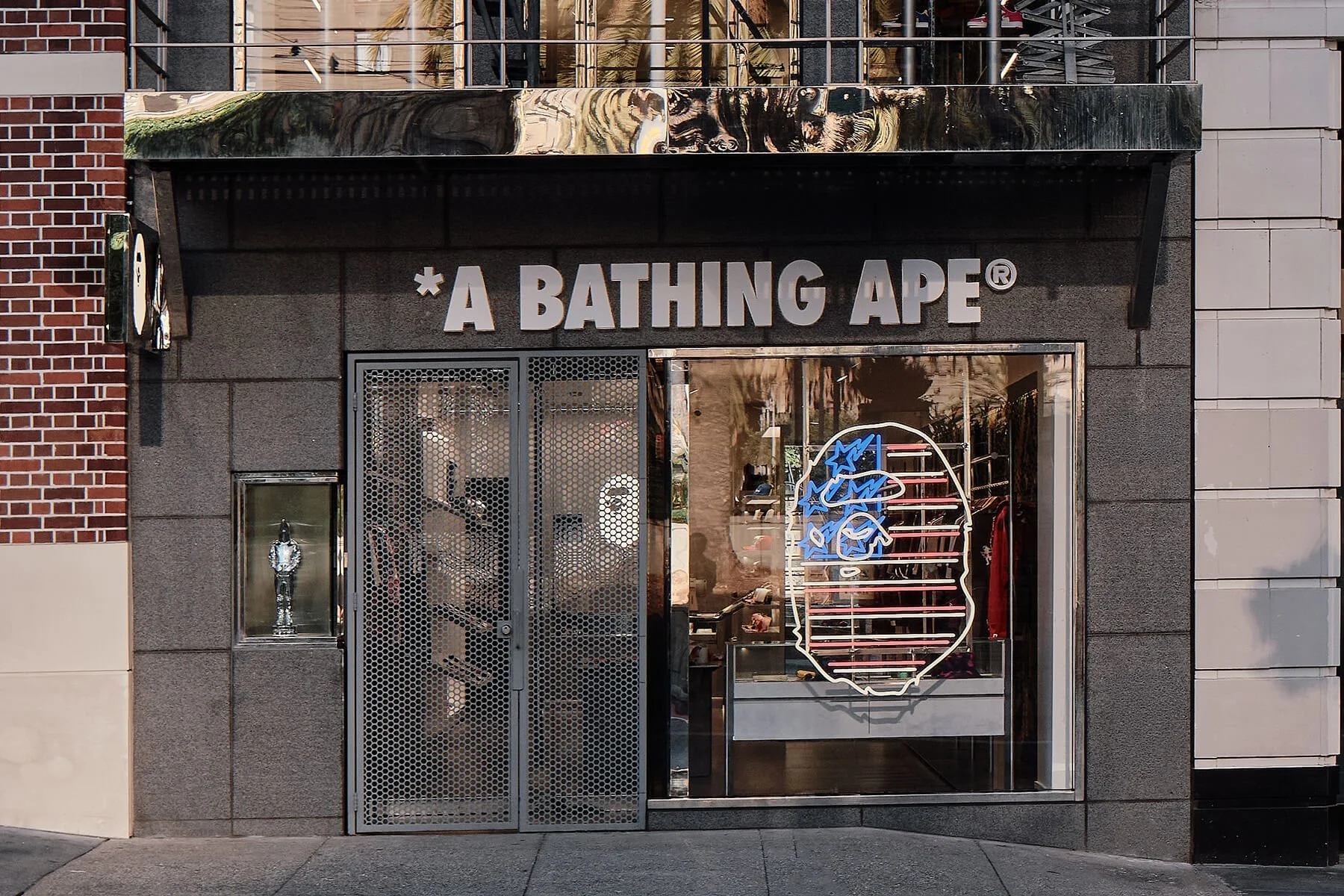
San Francisco’s Union Square has welcomed a new name to its retail landscape: A Bathing Ape (BAPE), the Japanese streetwear brand recognized for its camouflage patterns, distinctive graphics, and contemporary fashion.
Located at 216 Stockton Street, BAPE’s first San Francisco store brings its recognizable identity to one of the city's established shopping districts.
For The Retail Archive, a photography and video agency specializing in retail environments, the location offers an opportunity to explore how architecture, visual merchandising, and brand identity come together through professional retail store photography.
From its preserved exterior to its contemporary interior finishes, the store demonstrates how physical retail design can communicate a brand’s identity.
BAPE Opens Its First San Francisco Store in Union Square
Founded in Tokyo in 1993, BAPE has developed an international following through its streetwear collections, collaborations, and recognizable design language.
Its San Francisco opening marks another step in the brand’s U.S. retail expansion.
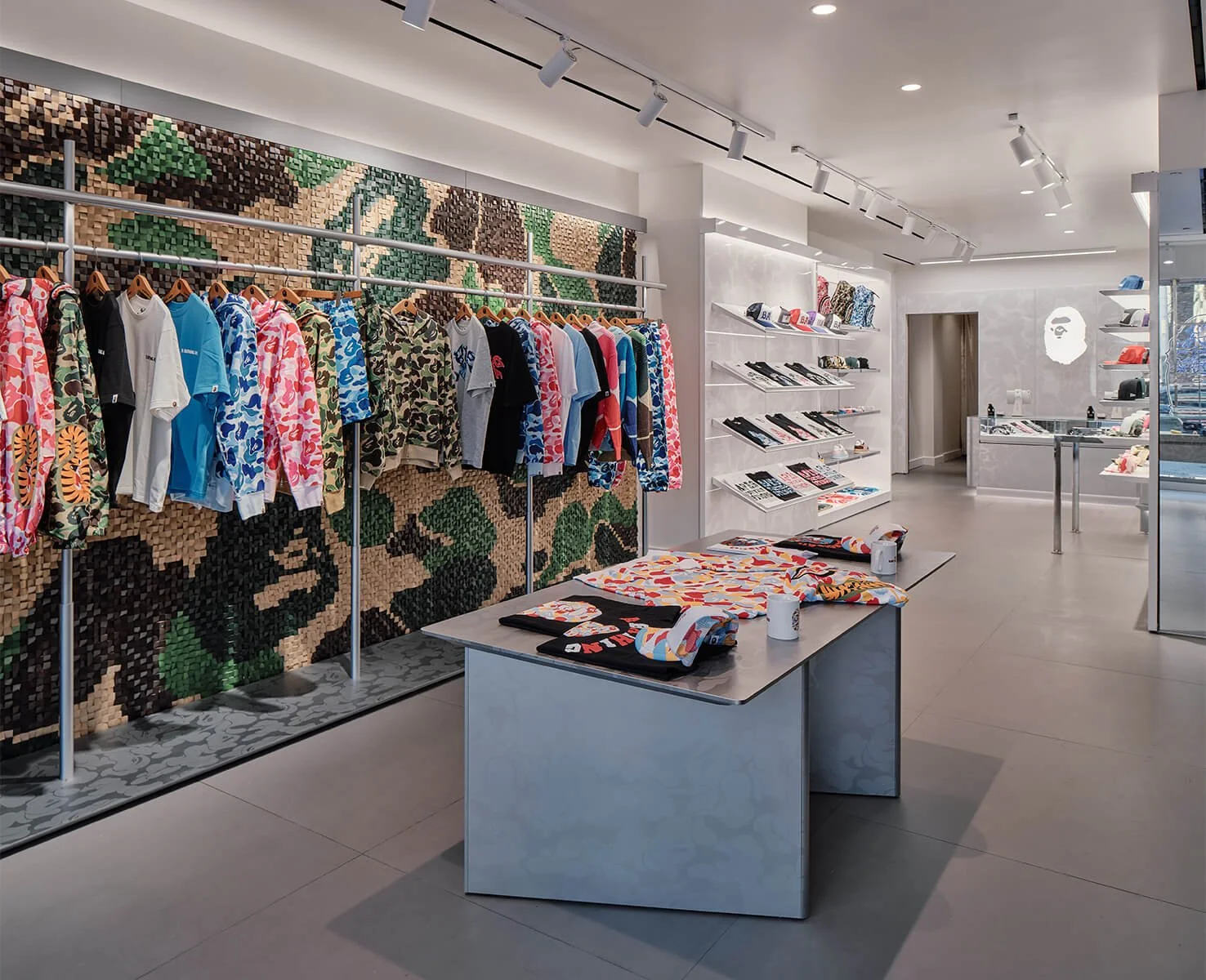
According to Superfuture, the new location occupies approximately 1,200 square feet across two levels. BAPE’s in-house design team in Tokyo developed the interior, combining contemporary materials with the building’s original architectural features.
The location introduces the brand’s established visual identity while responding to its Union Square surroundings.
For retail photography, this relationship between brand and location becomes an important part of documenting the completed environment.
Capturing BAPE’s Distinctive Storefront
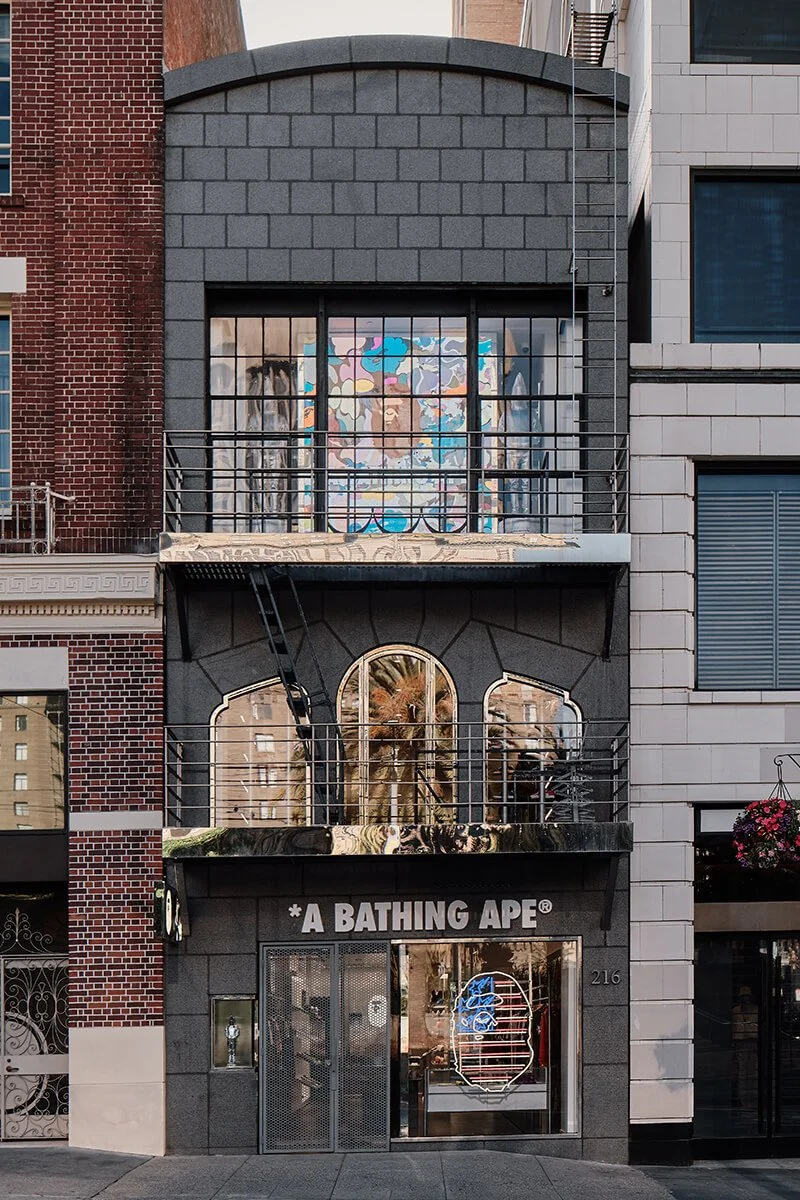
The storefront is one of the location’s most recognizable features.
Its original black-granite façade provides a contrasting backdrop for BAPE’s contemporary signage and illuminated branding.
An LED display featuring the APE HEAD logo, the brand’s Shark Seijin sculpture, and American flag-inspired neon lighting creates a distinct street-level presence.
These elements offer several opportunities for commercial retail photography, from wide architectural compositions to close-ups of branded details.
Why Storefront Photography Matters
Exterior photography establishes how a retail location presents itself within its surroundings.
A 2016 study published in Fashion and Textiles examined consumer responses to storefront environments. Researchers found that positive feelings toward a storefront were associated with stronger intentions to visit or shop, although the specific exterior features tested did not consistently improve responses.
The findings highlight the relationship between storefront perception and consumer interest.
For BAPE, documenting the exterior preserves how the brand has adapted its visual identity to a San Francisco location.
Inside BAPE San Francisco: Photographing the Retail Design
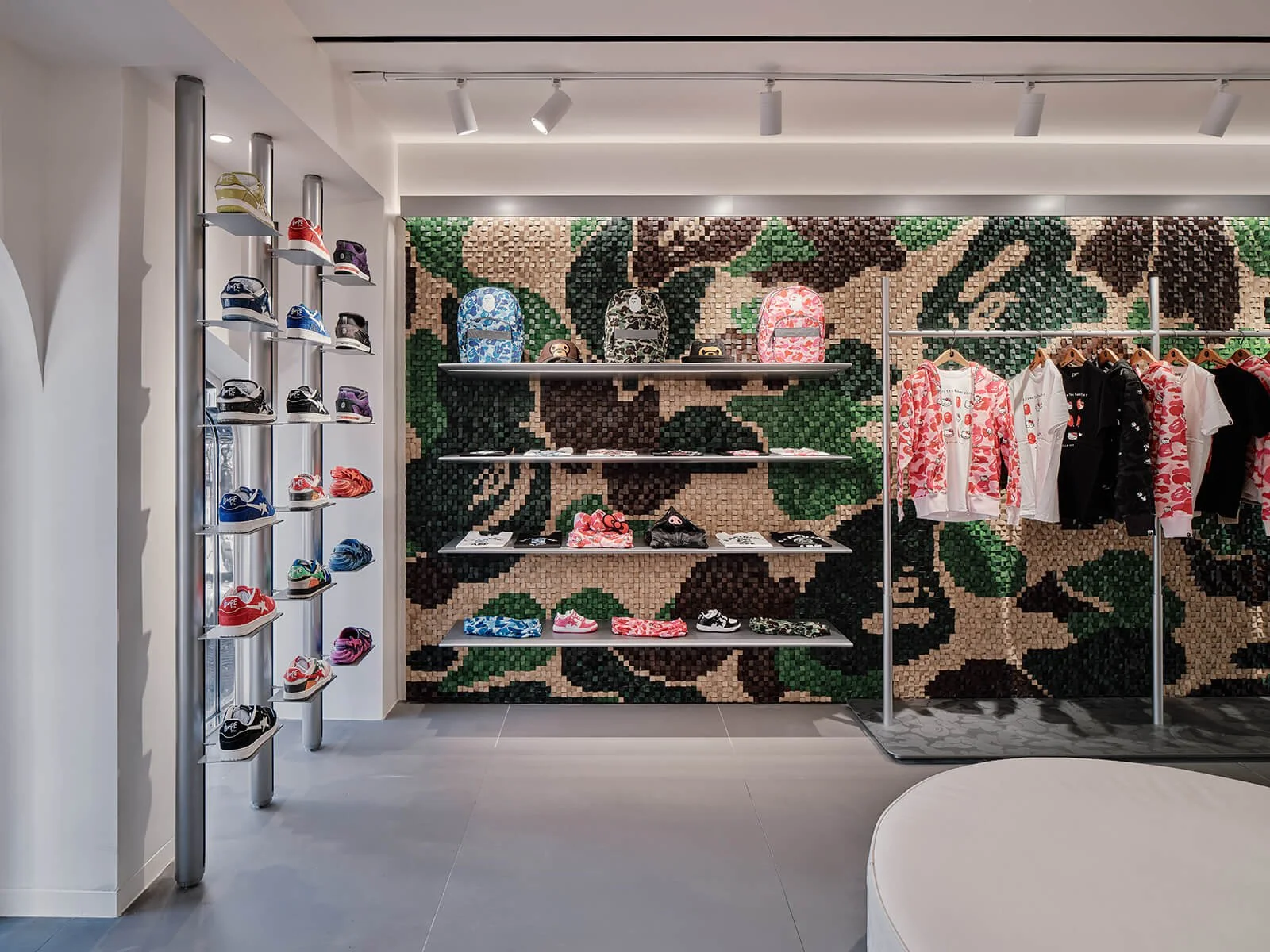
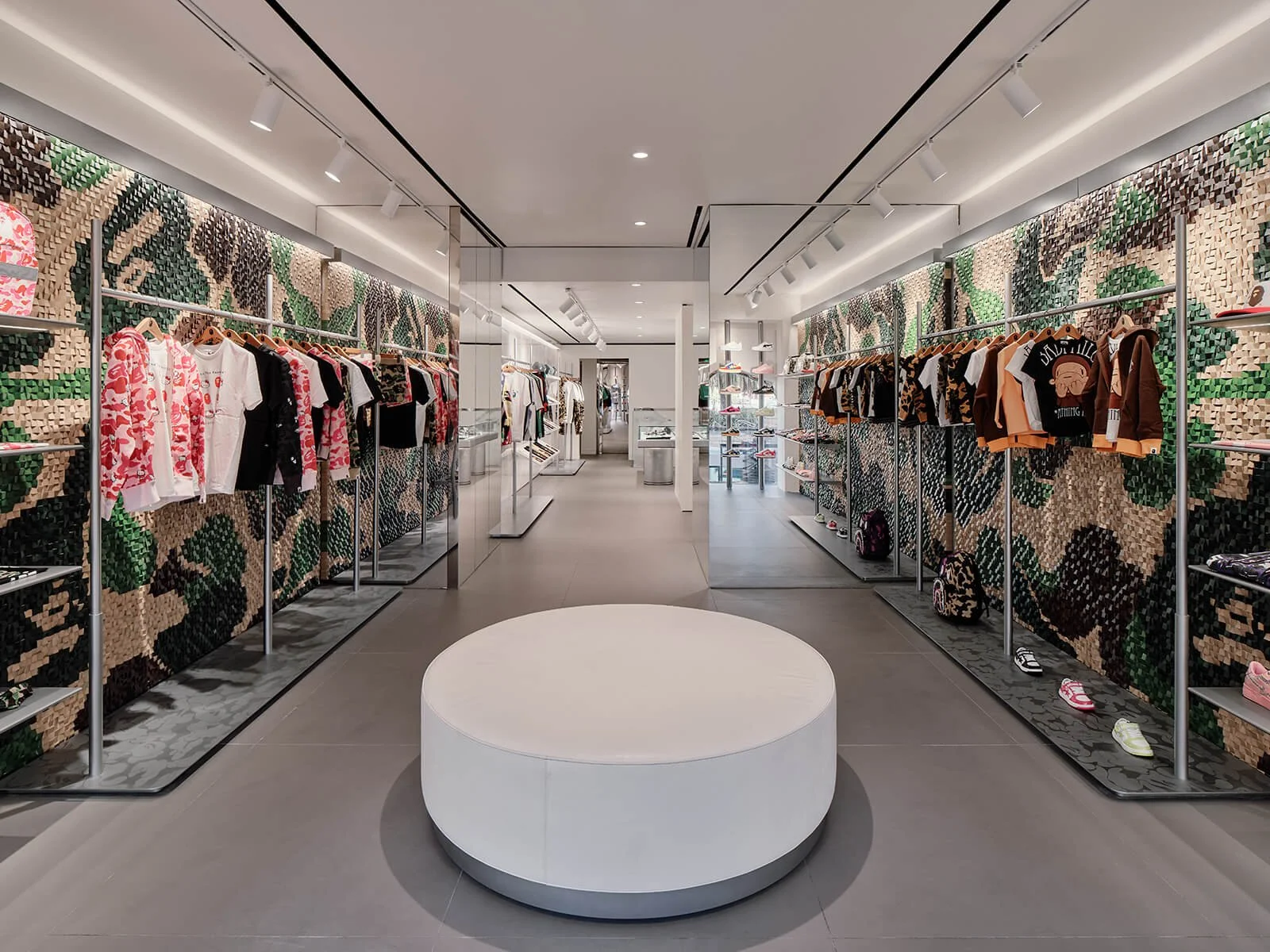
The store’s interior combines a restrained color palette with recognizable BAPE design elements.
White-toned surfaces create a neutral foundation, while high-gloss steel panels, wood-grain mosaic walls, and aluminum finishes featuring the ABC Camo pattern introduce contrasting textures.
These materials set the stage for the brand’s apparel, footwear, and accessories.
Capturing Materials, Lighting, and Spatial Design
Professional retail interior photography requires attention to how different elements work together.
Wide compositions communicate the store’s layout and the relationship between its two levels. Closer perspectives highlight individual fixtures, materials, and architectural details.
Lighting also influences how these features appear in photographs.
Reflective metal surfaces, illuminated displays, and contrasting finishes require careful exposure and composition to preserve their appearance.
A 2020 study in The International Review of Retail, Distribution and Consumer Research found that shoppers’ attitudes toward interior elements, including lighting and color schemes, were associated with satisfaction and willingness to remain in retail environments.
This research reinforces the importance of documenting the complete store atmosphere rather than focusing exclusively on merchandise.
Showcasing BAPE’s Visual Merchandising
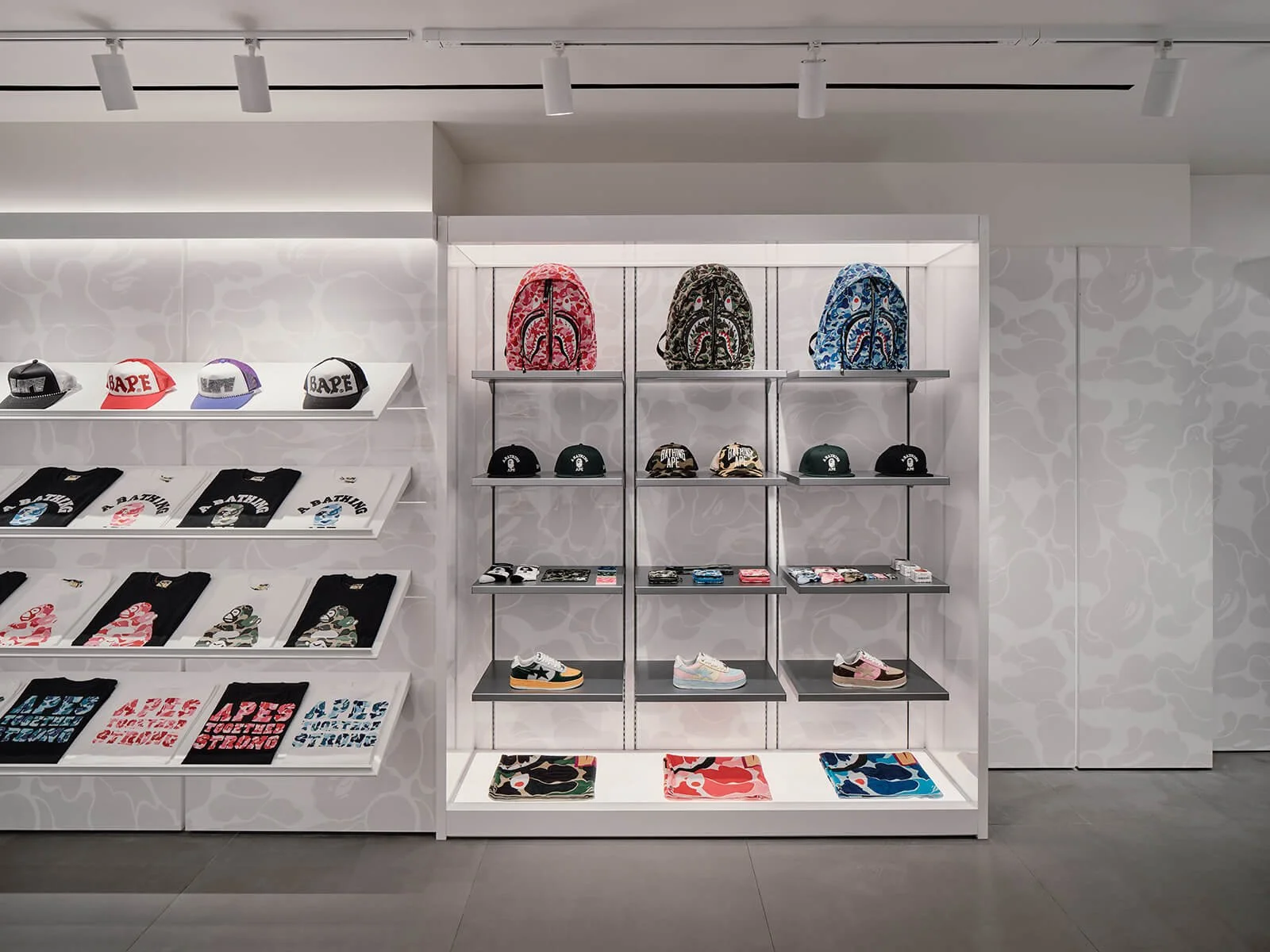
BAPE’s San Francisco store features men's and women's clothing, accessories, and footwear.
Its recognizable graphics and camouflage patterns contrast with the interior’s lighter architectural finishes.
For a comprehensive retail store capture, photography should communicate both individual merchandise presentations and their relationship to the surrounding space.
Three perspectives are particularly valuable:
Wide-angle photography: Establishes store layout, circulation areas, and merchandising arrangements.
Mid-range photography: Highlights apparel displays, shelving, and individual retail sections.
Detail photography: Documents branded graphics, materials, fixtures, and smaller design features.
Together, these perspectives create a visual record that communicates how the environment is organized.
The Relationship Between Design and Customer Experience
Research published in the Journal of Retailing examined the relationship between store atmosphere and shopping behavior.
The researchers found that shoppers' pleasure during their visits was associated with spending more time shopping and spending more.
Although the study did not examine photography, its findings demonstrate why the physical environment deserves attention when documenting retail spaces.
For BAPE, architecture, merchandise, and branded design elements form an important part of the store’s identity.
Creating a Lasting Visual Record of Retail Design
Retail environments continually change.
Merchandise rotates, displays are updated, and seasonal campaigns introduce new visual elements. Over time, stores may undergo renovations or complete redesigns.
Professional retail photography preserves a record of these environments at a particular moment.
For brands, architects, designers, and marketing teams, retail imagery can support websites, press coverage, design portfolios, social media, and internal presentations.
Retail store video can complement still photography by documenting movement through a space and showing how different architectural areas connect.
Together, photography and video provide a more comprehensive archive of a retail project.
The Retail Archive’s Experience With BAPE Retail Spaces
BAPE’s San Francisco location provides an interesting comparison with its store at American Dream Mall in New Jersey.
The Retail Archive previously documented the BAPE American Dream Mall location, where traditional Japanese-inspired details, wooden finishes, and contemporary streetwear merchandising shape the interior.
While the San Francisco store incorporates reflective metal surfaces and a lighter palette, both locations demonstrate how BAPE adapts its retail identity to different architectural settings.
Documenting these differences is an important part of professional retail photography.
Each location has its own design characteristics, and the imagery should communicate those details accurately.
Capture Your Next Retail Project With The Retail Archive
Every retail opening represents significant planning, design, and creative work. Professional photography helps preserve those efforts while creating visual assets for future marketing and communication.
The Retail Archive specializes in retail store photography, retail store video, new store openings, pop-ups, and in-store activation coverage throughout the United States.
Whether documenting a flagship store or a new retail concept, our focus is on capturing the architecture, merchandise, and design details that make each location distinctive.
Explore our retail photography portfolio or visit The Retail Archive to discuss your next retail photography or video project.